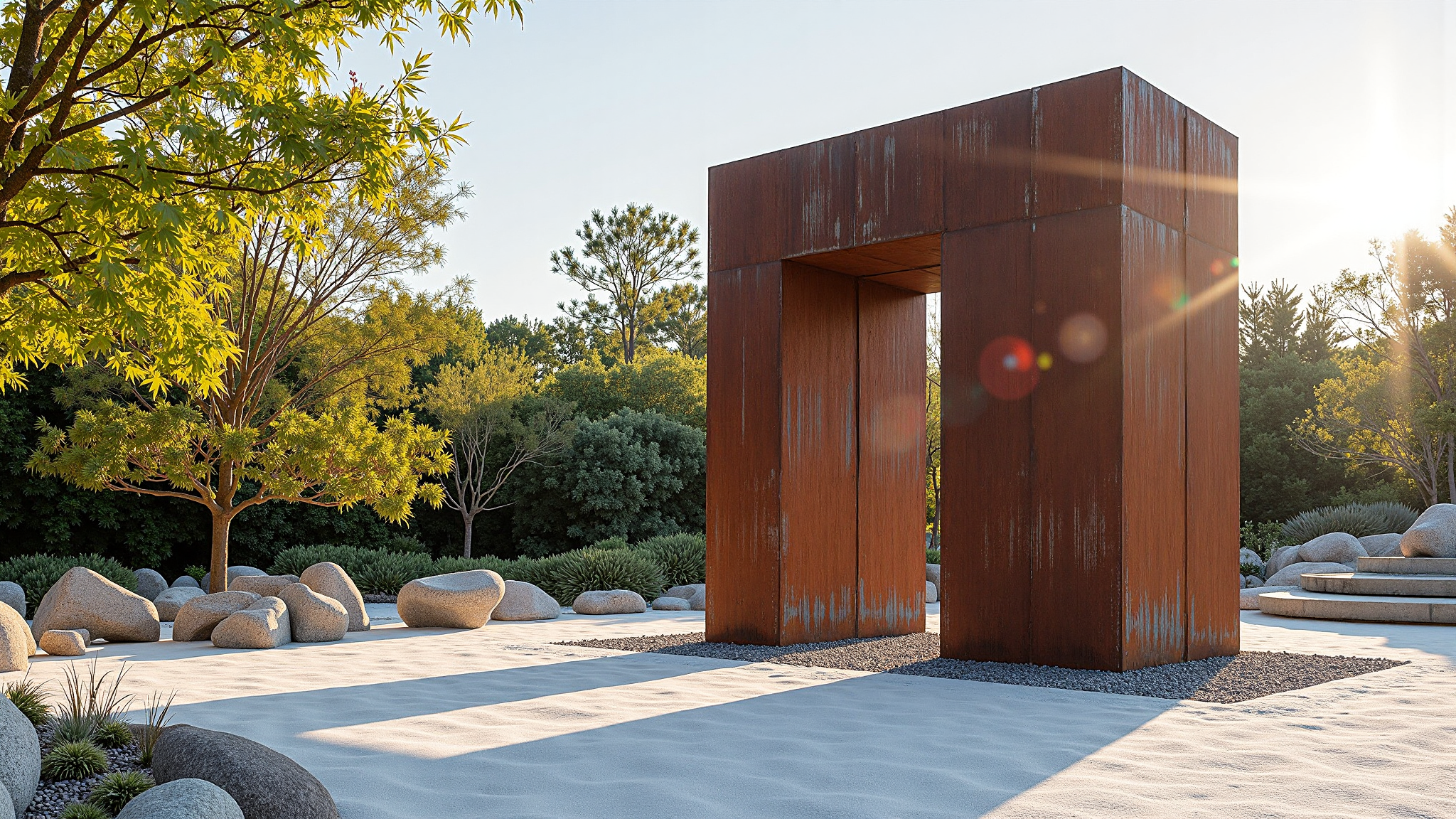
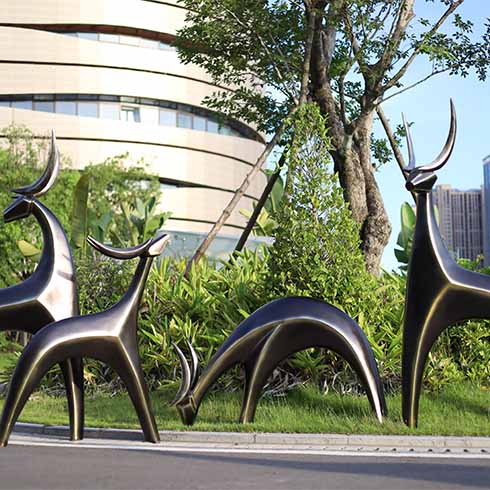
Urban Sculpture, City Street
A corner sculpture in weathering steel, detailed for a public street: how the patina is stabilised before rust reaches the pavement, how the footing is designed around underground services, and how edges, clearances and sight lines keep pedestrians safe. Useful for architects and city teams specifying artwork that has to age well in a busy, accessible location.
Product Description
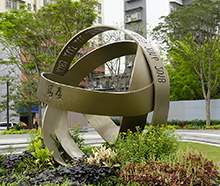
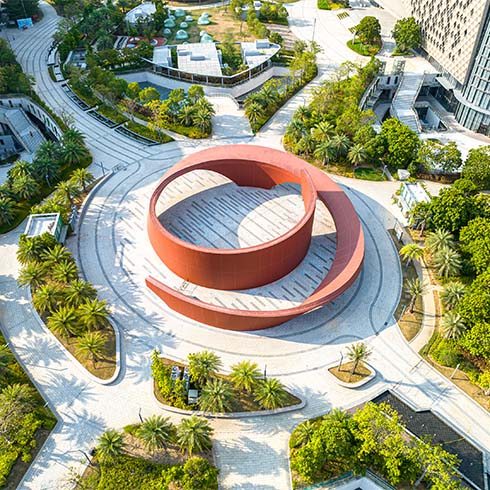
A street corner sculpture has to hold up against weather, traffic and constant public contact. Corten steel earns its place here: the surface ages into a deep, even rust that never needs repainting, and the material carries enough visual weight to anchor a busy corner. This piece was built around three practical questions — how the patina is stabilised, how the structure is anchored, and how people move around it.
Stable Rust, Controlled Surface
Weathering steel arrives with a mill scale that has to be removed before installation so the alloy can oxidise evenly instead of streaking. Outdoors the rust layer develops over several months and then slows to a stable state that sheds very little. We run a controlled wetting cycle in the workshop to build that layer early, which shortens the mottled stage and keeps rust off the surrounding pavement.
Runoff channels and a small setback from the paving protect the base through the first wet season. Where the sculpture sits near stone or light concrete, we fit a stainless drip edge so the first flush of oxidised water drains away from the surface below.
Foundations That Match the Street
A corner site usually sits above services, so the footing is designed around what is already underground. We set the form on a reinforced concrete pad sized to the steel's wind loading, with a galvanised anchor cage cast in place. Bolted connections sit inside the plate line, so no fixings are exposed to tampering.
Where the site is tight the base plate is finished flush with the paving, which lets the form appear to grow straight out of the ground. Drainage falls away from the plinth on all sides, and an inspection cover keeps the anchor pockets serviceable without lifting the sculpture.
Keeping Pedestrians Safe
People will touch it, lean on it and walk under it, so edges are radiused and the lowest cantilever clears head height. The sculpture is placed to leave a clear path around the corner for wheelchairs and pushchairs, with paving level and no trip lip at the plinth. Sharp rust edges receive a hand-ground bevel.
We also check sight lines from the crossing so drivers read the form as a fixed object rather than a moving shape.
- Previous: Stainless Steel Plaza Sculpture
- Next: